
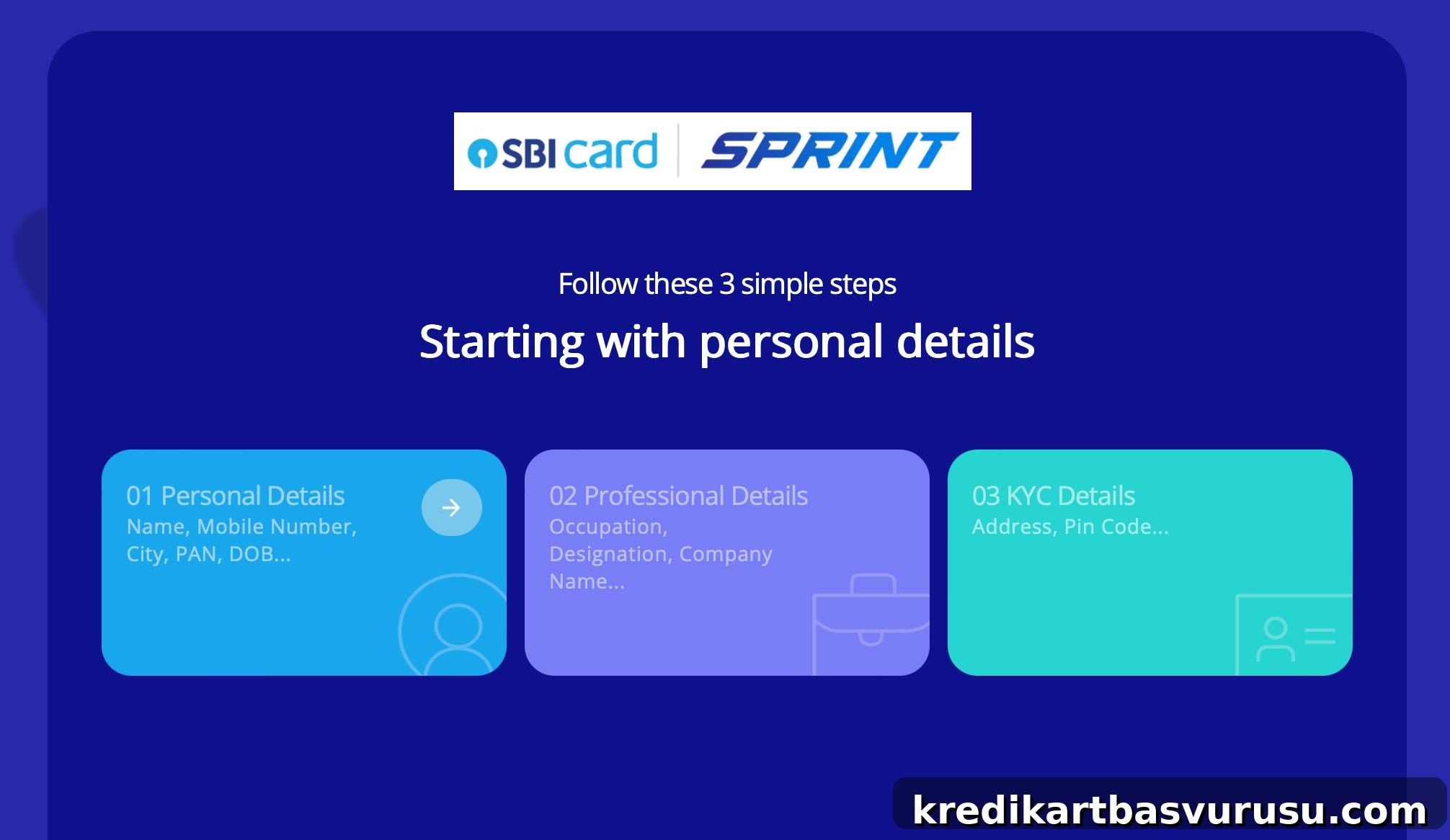
SBICard has introduced a new application platform called “Sprint” designed to speed up the credit card onboarding process by integrating a digital KYC flow.
Most SBI credit cards are now available through Sprint and can be applied for online. Certain cards, such as the SBI Cashback Card, require Sprint and cannot be processed through the older offline onboarding.
If you plan to apply for the Cashback Card or any other SBI card via Sprint, this guide explains the typical stages of the application flow. Steps may vary slightly for some applicants, but the outline below covers what you can generally expect.
Table of Contents
- Stage 1: Apply Online & VKYC
- Stage 2: Offline KYC
- Stage 3: Physical Card Delivery
- Final Thoughts
Stage 1: Apply Online & VKYC
The online Sprint flow captures your personal and employment details, performs Aadhaar OTP verification and completes a video KYC (V-KYC). If you apply from a desktop without a webcam, Sprint allows you to upload a passport-style photo during the VKYC step.
After submitting your information, the system generates an application number. Applicants who are pre-approved may receive instant approval at this stage and get access to a virtual card immediately for online use.
Instant approvals are uncommon but possible. For example, one user received instant approval because the second card variant was pre-approved and the SBICard app reflected that status.
Stage 2: Offline KYC
If your application requires further verification, the regional verification team will contact you and arrange a field visit. During this offline KYC, an executive typically captures a photograph and collects a signature on a physical form. For profiles with an active CIBIL record, income proofs may not be requested.
Some applicants may also need to complete biometric authentication. After the field verification is submitted, underwriting takes a couple of days to process the application and reach a decision.
In some cases, Sprint field teams use NESL authentication or a “straight-through” process where approval and virtual card issuance happen immediately once the field executive submits your details. This reduces the wait after verification, although the initial scheduling of the field visit can take time.
Note that while the verification itself can be quick, some applicants report long waits for the executive to appear—one user experienced nearly a 20-day delay between application and the field visit.
Stage 3: Physical Card Delivery
Once the card is approved—either immediately during the online step or after field verification—you can expect the physical card to arrive within approximately 5–10 days. However, you can start using your virtual card for online and contactless transactions as soon as approval is confirmed, so you do not need to wait for the plastic card to begin earning rewards or cashback.
Final Thoughts
Sprint represents a clear improvement over the older SBICard onboarding process, though it does not guarantee rapid approval for every applicant. Some users will benefit from instant approvals and fast onboarding, while others may experience delays at the field verification stage.
Improvements to the decisioning algorithm—such as granting instant approvals to existing SBICard holders—would further speed up the experience. It’s likely SBICard will refine Sprint over time and expand instant onboarding where feasible, following a trend many issuers are adopting for faster digital onboarding.
Have you recently used the SBICard Sprint application flow? Share your experience in the comments to help others understand how the process worked for you.